AP L4T1: Pharmacological management of Cannabis Withdrawal
Before diving into cannabis withdrawal and intoxication, we’ll briefly recap the neurobiology of cannabis use disorder. If you’ve already completed our Primer on Cannabis Use Disorder, this will be familiar. If not, we encourage you to explore the “Primer on Cannabis Use Disorder” certificate module for comprehensive coverage
Let us take a recap to learn more about Neurobiology of Cannabis
Cannabis and CB Receptors
CB1 receptor
CB2 receptors
Most common G-protein–coupled receptor in the Brain.
Found largely within the periphery of the brain, including cells of the immune system.
It has a major role in the behavioural effects of cannabis and THC across a range of species, including reward, subjective effects, and the development of dependence and withdrawal, including the maintenance of chronic marijuana smoking in humans.
Anti-inflammatory, Analgesic, Anticonvulsant, Antipsychotic Antioxidant, and neuroprotective properties
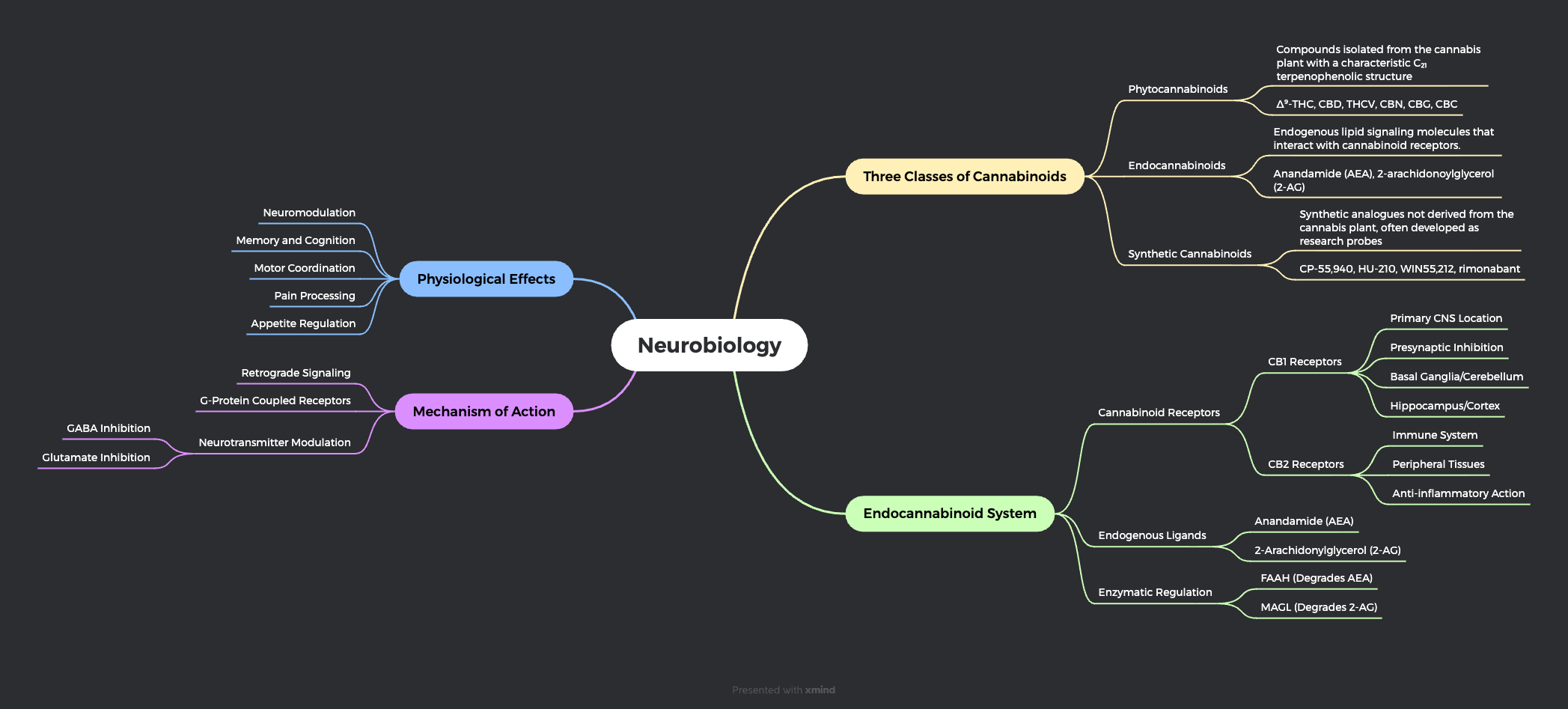
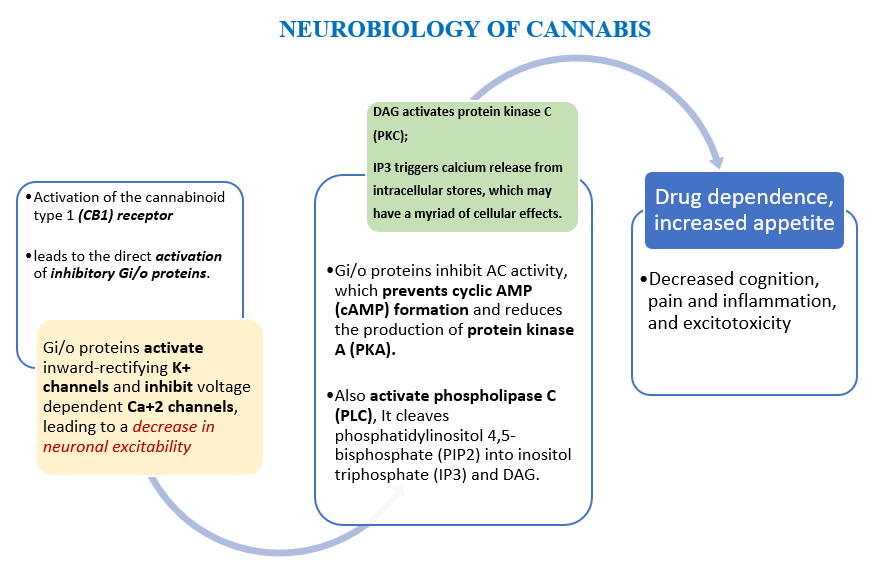
Neurobiology of Cannabis Dependence
- The consumption of cannabis directly targets the body’s natural endogenous endocannabinoid (eCB) system, which comprises the receptors that mediate the direct actions of cannabinoids, as well as the eCB lipid ligands (arachidonoyl ethanolamide, also called anandamide; and 2-arachidonoylglycerol, also called 2-AG) and the associated enzymes responsible for their synthesis and degradation10.
- The Gi/Go-protein-coupled cannabinoid receptor subtype 1 (CB1R) is the predominant form in the brain that mediates the psychoactive effects of cannabis.
Video clip on Cannabinoids and followed by Recap questions
CANNABIS WITHDRAWAL
Approximately 50% of people who are dependent on cannabis will experience cannabis withdrawal syndrome.
Cannabis withdrawal was first recognised by the DSM in the Fifth Edition (2013) (DSM-V) and adopted by the United States in the International Classification of Diseases, Tenth Revision (2015) (ICD-10).
Cannabis withdrawal is defined by DSM-5-TR as the following:
- Cessation of cannabis use that has been heavy and prolonged (ie, usually daily or almost daily use over a period of at least a few months).
- Three or more of the following signs and symptoms develop within approximately 1 week after cessation of heavy, prolonged use:
- Irritability, anger or aggression
- Nervousness or anxiety
- Sleep difficulty (ie, insomnia, disturbing dreams)
- Decreased appetite or weight loss
- Restlessness
- Depressed mood
- At least one of the following physical symptoms causing significant discomfort: abdominal pain, shakiness/tremors, sweating, fever, chills, or headache
- The signs or symptoms cause clinically significant distress or impairment in social, occupational, or other important areas of functioning.
- The signs or symptoms are not attributable to another medical condition and are not better explained by another mental disorder, including intoxication or withdrawal from another substance.
The DSM-5 does not include “craving” as a symptom of cannabis withdrawal, though this particular symptom has generally been identified as an important factor in CUD.
Cannabis withdrawal is clinically significant because of the unpleasant symptoms that can interfere with daily functioning in addition to serving as a negative reinforcer driving relapse and ongoing use of cannabis (Allsop et al, 2012).
Progress of Cannabis Withdrawal
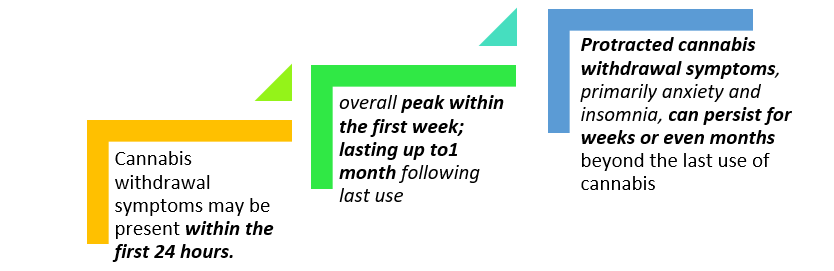
Cannabis withdrawal symptoms typically begin 24–48 hours after cessation, peak between 2–6 days, and generally subside to baseline levels within 1–3 weeks (though individuals with prolonged, heavy use may experience persistent symptoms such as sleep disturbances, low mood, and cravings for more than three weeks).
Severity of withdrawal depends on the amount, frequency and potency of cannabis use.
Biologically, there is evidence that cannabis withdrawal is associated with the downregulation of brain cannabinoid-1 (CB-1) receptors as a result of chronic use. When cessation (or relative cessation) of activity at CB-1 receptors occurs, the deficiency results in interference with neurotransmitter systems, leading to the above-mentioned symptoms (Bonnet and Preuss, 2017).
Management OF CANNABIS WITHDRAWAL
Symptomatic management coupled with psychoeducation and counselling is the recommended treatment for managing cannabis withdrawal symptoms.
No medication is approved by the U.S. FDA (or any national regulatory authority) for the treatment of marijuana withdrawal. However, some medications may be used to manage certain symptoms of withdrawal.
CANNABINOID AGONIST REPLACEMENT (First-line)
Medication
Evidence
Mechanism
Dosing
Indications & Timeline
Nabiximols
(THC/CBD)
⭐⭐⭐
Best Evidence
Partial CB1 agonist – controlled cannabinoid replacement
2.7mg THC + 2.5mg CBD per spray. Start 2-4 sprays/day, max 32 sprays/day
For: All withdrawal symptoms, cravings
Timeline: Days 1-14, tapered over 12 weeks
Dronabinol
⭐⭐⭐
Good Evidence
Synthetic delta-9-THC – CB1 receptor agonist
20-40mg/day in divided doses. Start low, titrate based on response
For: General withdrawal symptoms, irritability, sleep
Timeline: Days 1-14, gradual taper
SYMPTOMATIC TREATMENT
Medication
Evidence
Mechanism
Dosing
Indications & Timeline
Gabapentin
⭐⭐
Limited Evidence
Modulates calcium channels, reduces neural excitability
300-900mg/day in divided doses
For: Anxiety, restlessness, insomnia
Note: Abuse potential, sedation common
Quetiapine
⭐
Very Limited
Atypical antipsychotic with sedative properties
25-100mg at bedtime
For: Severe insomnia, agitation (not first-line)
Timeline: Short-term only (3-7 days)
ADJUNCTIVE/SUPPORTIVE
Medication
Evidence
Mechanism
Dosing
Indications & Timeline
SSRIs
(e.g., Fluoxetine)
⭐
Minimal Evidence
Serotonin reuptake inhibition
Standard antidepressant doses
For: Pre-existing depression/anxiety
Note: Delayed onset (2-4 weeks), not for acute withdrawal
Behavioral Support & Sleep Hygiene
⭐⭐⭐
Essential
Non-pharmacological management
Daily: CBT, motivational interviewing, sleep hygiene, exercise
For: All withdrawal symptoms
Note: Should accompany any pharmacotherapy
Evidence Quality Legend
⭐⭐⭐ Good Evidence – Multiple RCTs and systematic reviews support efficacy
⭐⭐ Limited Evidence – Some supporting studies, plausible mechanism
⭐ Minimal Evidence – Case reports or theoretical basis only
Treatment Strategy
Goal: Symptom relief during detoxification to prevent relapse
Approach:
- First-line: Cannabinoid agonist replacement therapy (Nabiximols or Dronabinol)
- Adjunctive: Symptomatic treatment for specific symptoms (anxiety, insomnia)
- Essential: Psychosocial support + CBT must accompany pharmacotherapy
Dronabinol
Dronabinol has shown benefit in reducing withdrawal symptoms and improving treatment retention, it has not demonstrated superiority over placebo in reducing cannabis use or promoting abstinence in outpatient treatment trials
FDA approved for AIDS Anorexia
Dronabinol, an orally bioavailable synthetic form of delta-9-tetrahydrocannabinol (THC), has FDA indications for the treatment of anorexia associated with AIDS and second-line treatment for nausea and vomiting associated with cancer chemotherapy.
Learn More
Evidence
• Levin et al. (2011): A randomized, double-blind, placebo-controlled trial of 156 cannabis-dependent individuals (122 randomized) found that dronabinol (up to 40 mg/day) was superior to placebo in promoting retention in treatment and reducing withdrawal symptoms. However, there was no significant difference between treatment groups in the proportion of participants who achieved sustained abstinence or reduced marijuana use.
• Levin et al. (2016): A randomized, double-blind, placebo-controlled trial testing dronabinol (20 mg three times daily) combined with lofexidine (0.6 mg three times daily) versus placebo in 156 cannabis-dependent adults (122 randomized). Both groups showed reductions in cannabis use, but there was no significant advantage of the active medication over placebo in promoting abstinence.
• A 2022 systematic review of randomized controlled trials found that dronabinol showed promise in reducing withdrawal symptoms and improving treatment retention, but demonstrated limited therapeutic potential in reducing cannabis use or achieving abstinence.
Learn More
Dose and Side-effects
In trials, dosages between 30-90 mg per day in divided doses have been tested. Higher doses well tolerated
Common adverse reactions include asthenia, abdominal pain, nausea, vomiting, palpitations, tachycardia, vasodilation, diarrhea, and fecal incontinence.
Learn More
Dronabinol
Dronabinol has shown benefit in reducing withdrawal symptoms and improving treatment retention, it has not demonstrated superiority over placebo in reducing cannabis use or promoting abstinence in outpatient treatment trials.
CANNABINOID AGONIST APPROACHES
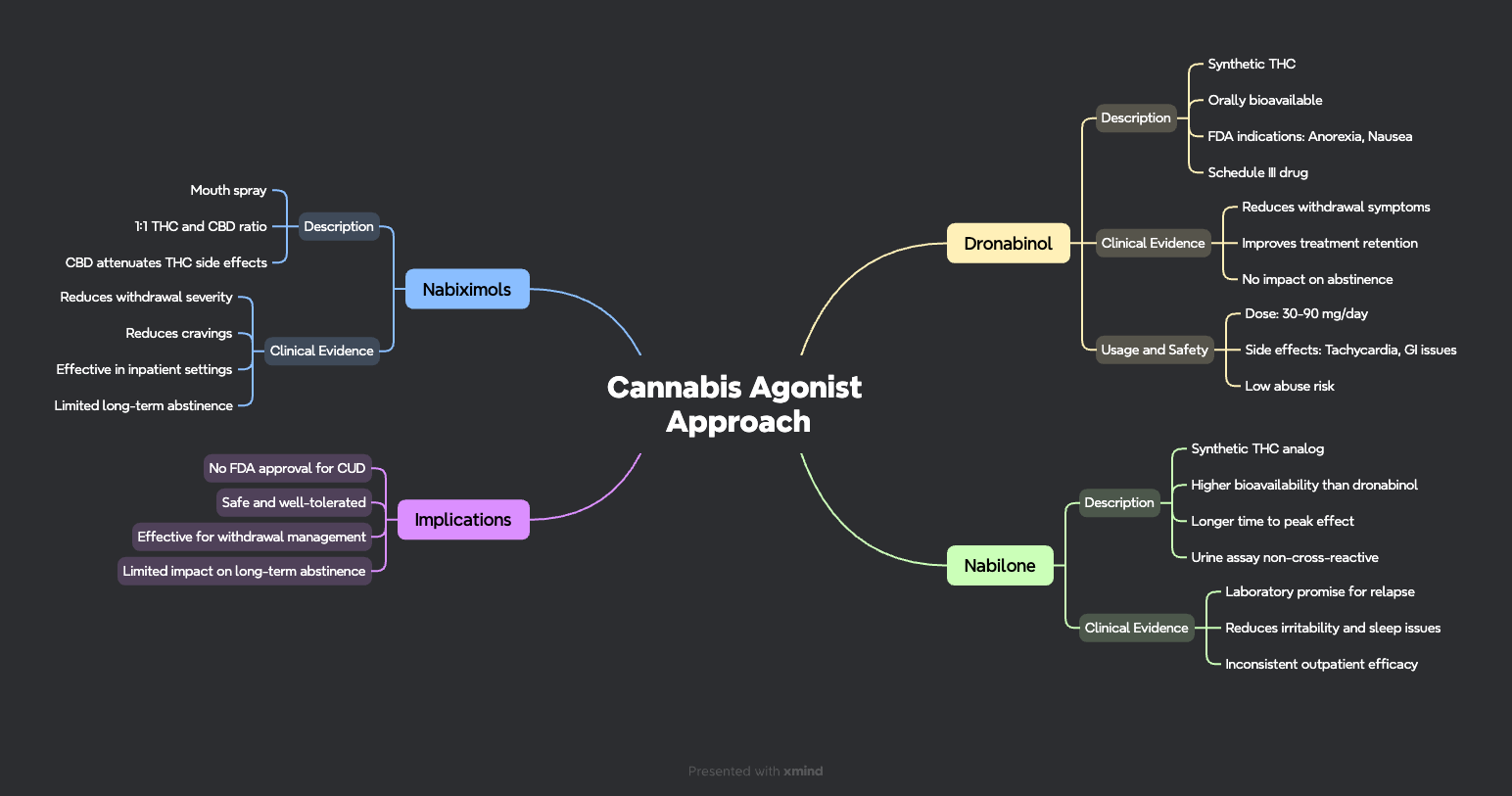
In summary, medications with CB-1 receptor agonism may be effective in treating cannabis withdrawal, but need further research studies
Apart from the above medications, adjuvant medications for specific symptoms can also be given as a general approach:
| Sleeplessness | Sleep hygiene + Mirtazapine/ Trazodone/ Promethazine/ Zolpidem/ Diazepam |
| Anxiety, restlessness | Benzodiazepines |
| Headache | Paracetamol |
| Nausea, vomiting | Promethazine/ Dronabinol + Gastro-protective measures |
| Decreased appetite | Nutritional support + Mirtazapine / Dronabinol |
| Irritability | Psychoeducation + Benzodiazepines |
Summary
Often it is self-limiting and rarely need any intevention
There is no approved medication for Cannabis withdrawal syndrome.
Among moderate-severe cannabis use disorder, dronabinol (oral synthetic THC, 30, 40, or 60 mg daily), gabapentin (1,200 mg daily in divided doses), and nabiximols ( THC+ CBD sublingual spray), significantly reduced cannabis withdrawal symptoms
Synthetic cannabis withdrawal
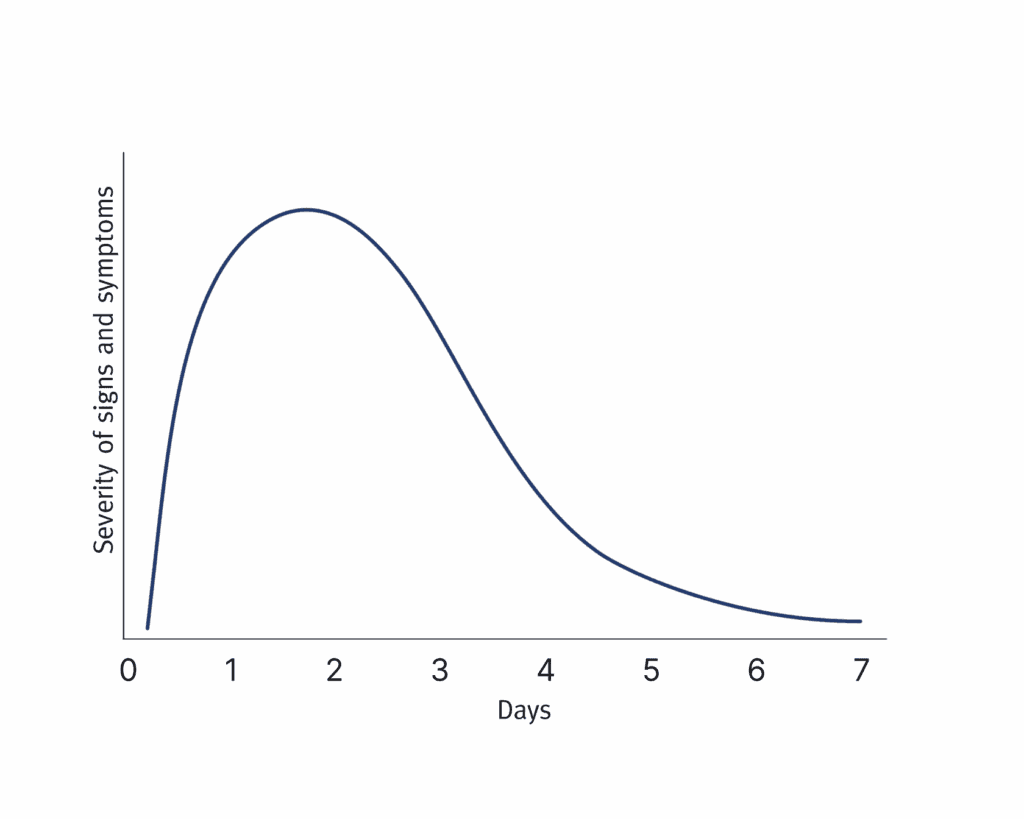
Synthetic cannabis withdrawal has not been well-studied, but experience to date indicates the approximate time course:
Onset: Hours (can be as little as 1 hour)
Peak: approximately day 2
Duration: approximately 1 week
Physical symptoms: The most common and unique are palpitations, shortness of breath, chest pain, and Tachycardia, among others.
There is no specific pharmacotherapy
let us reflect on this scenario and explore
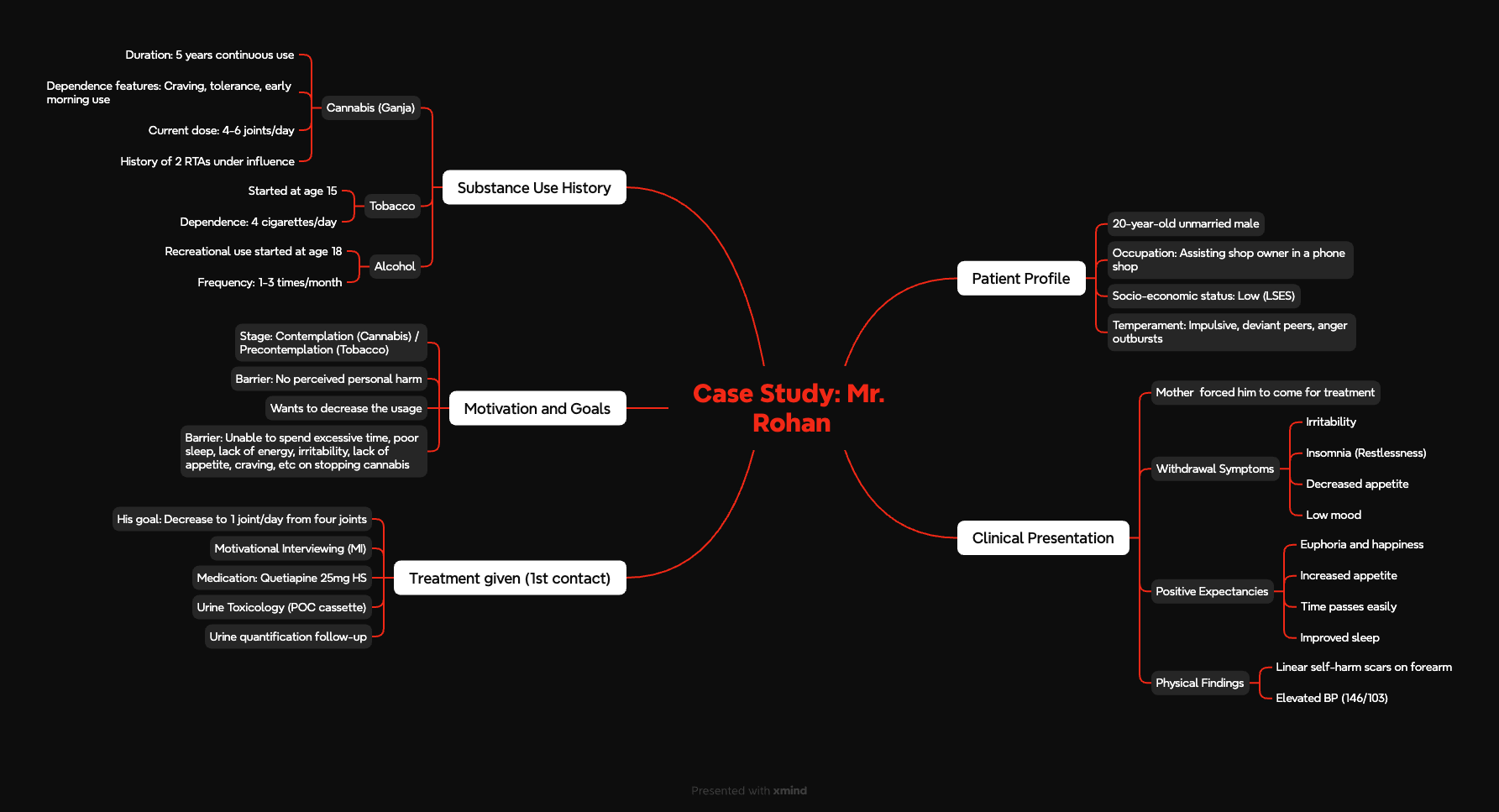
Thanks to Dr Aarti Singh, MD Resident NIMHANS for assisting in the above case scenario.
Now let us reflect on the above learning before we enter into next and last topic.